

Warehouse efficiency is fundamental to a resilient and competitive supply chain. As order volumes increase and customer expectations tighten, businesses must find practical ways to maximise space, improve workflow and control operational costs. One highly effective solution is the strategic use of stackable and nestable plastic containers.
Designed for durability, consistency and space optimisation, these containers offer measurable improvements across storage, handling and distribution processes.
Why Smarter Storage Improves Performance
Inefficient storage systems often lead to wasted space, slow picking times and unnecessary handling. Overcrowded aisles and poorly organised stock can reduce productivity and increase the risk of damage.
Stackable and nestable plastic containers help address these challenges by introducing structure and standardisation. When storage units are uniform in size and shape, it becomes easier to design efficient layouts that support smoother movement of goods.

Understanding Stackable and Nestable Containers
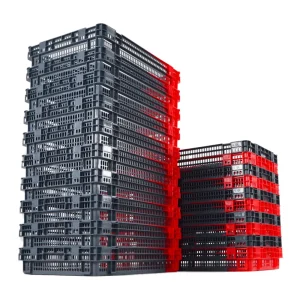
Stackable plastic containers are engineered to sit securely on top of each other when loaded. Reinforced corners and consistent dimensions allow safe vertical stacking, helping warehouses make better use of available height.
Nestable plastic containers are designed to fit neatly inside one another when empty. This dramatically reduces the footprint of unused containers, freeing up valuable floor space.
Many modern designs combine both features, offering stackability during use and nestability when empty. This flexibility makes them particularly effective in fast-moving warehouse environments.
Maximise Storage Without Expanding Space
Warehouse space is a significant overhead. Expanding premises is costly, so improving the utilisation of existing space should be the priority.
Stackable containers allow businesses to build upwards safely and efficiently. Their load-bearing strength ensures stability while maintaining easy access to stored goods. Standard sizing also supports compatibility with racking systems and pallet configurations.
By increasing vertical storage density, businesses can hold more stock within the same footprint, reducing pressure on floor space.
Improve Workflow and Reduce Handling Time
Efficiency depends on how quickly and accurately goods move through the warehouse. Standardised plastic containers create a more predictable storage environment, which improves visibility and accessibility.
Operational advantages include:
- Improved pick accuracy
- Faster replenishment cycles
- Reduced time spent locating stock
- Better integration with barcode and tracking systems
When containers are easy to identify and handle, staff can complete tasks more quickly and with fewer errors. This directly improves throughput and service levels.
Reduce Clutter with Nestable Solutions
Empty containers often create unnecessary congestion. During off-peak periods or after deliveries are completed, unused units can occupy valuable operational space.
Nestable plastic containers significantly reduce this problem. By collapsing into one another when empty, they minimise storage requirements and keep work areas clear. This supports safer movement of equipment and personnel while maintaining a more organised environment.
Enhance Durability and Lower Long-Term Costs
Unlike cardboard or timber alternatives, plastic containers are designed for repeated use. They are resistant to impact, moisture and general wear, making them suitable for demanding warehouse conditions.
Although the initial investment may be higher, the long-term savings are substantial. Reusable containers reduce replacement frequency, minimise product damage and lower waste disposal costs. Over time, this leads to improved cost efficiency and a stronger return on investment.
Support Safer Operations
Health and safety are closely linked to warehouse efficiency. Unstable stacks and inconsistent packaging increase the risk of accidents and damaged goods.
Stackable plastic containers are built for stability and ease of handling. Ergonomic features and predictable load distribution help reduce strain on employees. Improved organisation also reduces trip hazards and blocked walkways.
A safer warehouse environment contributes to higher productivity and fewer disruptions.
Driving Supply Chain Performance
Improving warehouse efficiency requires practical, scalable solutions. Stackable and nestable plastic containers provide a reliable foundation for better space utilisation, streamlined processes and consistent handling standards.
By investing in durable, reusable container systems, businesses can strengthen operational performance without expanding their footprint. In a competitive logistics landscape, optimised storage is not just a practical improvement but a strategic advantage.


